Editable Healthy Diet Meal Planner
Keeping track of what you eat, when you eat, and how your meals support your broader wellness goals can feel overwhelming. Between work schedules, family commitments, and shifting energy levels, most people find it hard to stay consistent. An Editable Healthy Diet Meal Planner bridges that gap by giving you a structured yet flexible system to plan meals, log food intake, and align your eating habits with your fitness or health objectives. Whether you are preparing for a weight loss journey, managing a specific dietary protocol like keto, or simply trying to eat more mindfully, this type of planner adapts to your rhythm rather than forcing you into a rigid template.
What makes this meal planner different
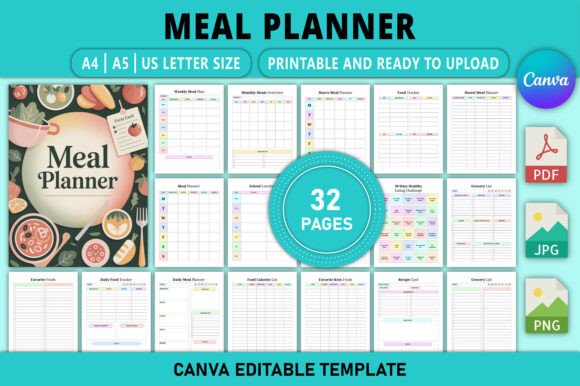
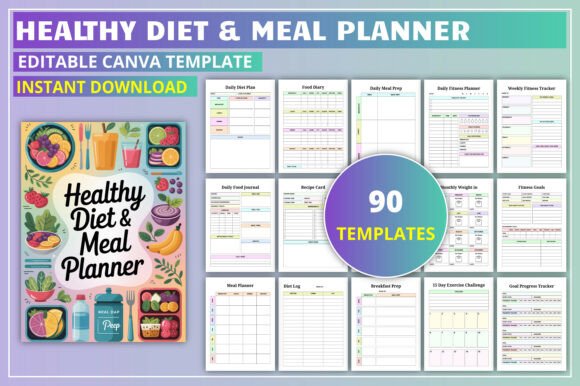
Unlike static print-and-fill planners, this version is designed to be edited directly in Canva. That means you can change colors, fonts, page layouts, and even add or remove sections before printing or using it digitally. For someone who likes things to look a certain way, or for a creator who wants to rebrand and resell, that ability to customize is a game-changer. The planner includes over 35 distinct pages, ranging from daily diet logs and food diaries to grocery lists, recipe cards, weekly menus, and allergy tracking sheets. It covers the full spectrum of meal planning without forcing you to use every page. You pick what matters.
The practical value here is that you are not locked into someone else's idea of what a healthy diet looks like. If you follow a low-carb approach, you can use the keto food list and macro meal planner. If you prefer intuitive eating, you might lean on the food diary and daily journal pages. If you meal prep on Sundays, the breakfast, lunch, and dinner prep sheets become your weekly anchor. This flexibility matters because no two people have the same relationship with food.
Beginners starting their health journey
If you are new to meal planning, the sheer amount of information online can be paralyzing. You might not know what a balanced plate looks like, how to track calories or macros, or how to build a grocery list that actually supports your goals. This planner simplifies that process. The Food Calories List, Favorite Foods pages, and Meal Ideas sections give you a starting point without requiring prior knowledge. You can begin by simply writing down what you eat for a week using the Daily Food Journal, then gradually introduce the Meal Prep sheets and Weekly Menu as you get more comfortable. The learning curve is gentle, and because everything is editable, you can remove pages that feel advanced and add them later.
Experienced health enthusiasts and fitness trackers
If you have been tracking your food for a while, you already know that consistency is harder than knowledge. You understand macros, you know which foods trigger bloating or allergies, and you have a sense of what your body needs. What you may lack is a single place to organize all that information. This planner includes advanced tools like the Macro Meal Planner, Food Points Value tracker, and Things To Avoid log. These pages allow you to move beyond surface-level planning and into precision. For example, you can use the Diet Log alongside the Diet Journal to compare your planned intake with your actual energy levels, digestion, or workout performance. Over time, that kind of data helps you fine-tune your eating patterns with real evidence.
Creators and small business owners
If you are a content creator, educator, or small business owner in the wellness space, this planner offers commercial value. Because it is fully editable in Canva, you can customize it with your brand colors, logo, and fonts, then sell it as a digital product on platforms like Etsy or Gumroad. The KDP-ready format means you can also upload it directly to Amazon for print-on-demand. The inclusion of pages like Favorite Keto Foods, Food Beverage logs, and Allergy trackers means you can target niche audiences without creating each page from scratch. Instead of designing a planner from zero, you start with a comprehensive foundation and tailor it to your community's specific needs. That saves weeks of work and gives you a product that already has market validation.
Busy professionals and freelancers
When your schedule is packed, meal planning often becomes an afterthought. You grab whatever is available, eat at irregular times, and wonder why your energy dips mid-afternoon. For this audience, the planner's value lies in speed and simplicity. You do not need to fill out every page. You can print just the Daily Meal Prep sheet and the Grocery List, spend ten minutes planning your week, and move on. The What’s for Breakfast, What’s for Lunch, and What’s for Dinner pages are designed for quick checklists rather than lengthy journaling. Over time, those small investments of time add up to better eating habits without adding cognitive load to your day.
Educators and wellness coaches
If you teach nutrition, run a wellness program, or coach clients one-on-one, you need tools that are easy to distribute and understand. This planner works as a takeaway resource for your students or clients. You can customize it to reflect the specific dietary approach you teach, remove pages that do not align with your curriculum, and add your own instructions or tips. The Recipe Card and My Weekly Menu pages are especially useful for group challenges where participants share meal ideas. Because the planner is editable, you can also create different versions for different client needs: one for weight loss, one for muscle gain, one for digestive health, all from the same base template.
Key sections and how to use them
Let us walk through several pages that different users may prioritize depending on their goals.
Daily Diet Plan and Diet Log
These two pages work as the core of daily tracking. The Daily Diet Plan helps you outline what you intend to eat, while the Diet Log records what you actually consumed. Comparing the two over a week reveals patterns: maybe you consistently skip lunch, or you snack more in the evening than you realized. For a beginner, this is eye-opening. For an experienced tracker, it is a way to measure adherence without judgment.
Food Diary and Daily Food Journal
These pages lean more toward reflection than strict tracking. You can note not just what you ate, but how you felt before and after. Did that high-carb breakfast leave you sluggish? Did the protein-rich lunch keep you full through the afternoon? This is helpful for anyone trying to identify food sensitivities or optimize energy. The Food Diary is also a great starting point for someone who is not ready to track macros but wants to become more mindful.
Grocery List and Shopping List
Separate grocery and shopping lists may seem redundant, but they serve different purposes. The Grocery List is for perishable items you need for specific recipes. The Shopping List can include household staples, supplements, or non-food items you pick up during the same trip. For a busy parent or a freelancer who shops once a week, keeping these separate reduces the chance of forgetting key ingredients.
Macro Meal Planner and Food Points Value
For those who track macronutrients or use a points-based system like Weight Watchers, these pages are essential. The Macro Meal Planner lets you allocate protein, carbs, and fat across meals. The Food Points Value page works well for systems that assign point values to foods. If you are a coach, you can pre-fill these pages with your clients' targets before sending them the planner.
Recipe Card and My Weekly Menu
The Recipe Card is a simple template for writing down go-to meals. Once you fill it out, you can rotate those recipes into your weekly menu without reinventing the wheel each time. The My Weekly Menu page gives you a bird's-eye view of the week, which helps with grocery planning and prevents last-minute takeout decisions.
Allergy tracking and Foods To Avoid
If you have food allergies or intolerances, the Foods To Avoid Allergies and Things To Avoid pages are not optional. They serve as a quick reference you can revisit when you are trying a new recipe or eating away from home. For someone with celiac disease, a nut allergy, or lactose intolerance, these pages reduce the mental effort of remembering every trigger food.
What to consider before choosing this planner
While the Editable Healthy Diet Meal Planner works for a wide range of users, it is worth reflecting on whether it matches your specific needs. If you prefer a completely analog, non-digital experience and never want to open Canva, the editable format may feel like an extra step. However, you can customize it once to your liking, then print as many copies as you need. That one-time setup saves you from buying multiple planners later.
If your diet is very simple and you only need a single daily log page, a full 35-page planner may feel like overkill. In that case, you can delete the pages you do not need and keep only what serves you. The ability to remove pages is as valuable as the ability to add them.
If you are a creator looking to sell this planner, consider your audience's skill level with Canva. Some buyers may feel intimidated by digital design tools. Offering a pre-filled version alongside the editable one can reduce friction and increase sales. The KDP-ready format also means you need to ensure your file meets Amazon's print specifications, which this planner is designed to do.
Long-term usefulness and adaptability
A good meal planner grows with you. What you need when you are starting a keto diet is different from what you need six months later when you are maintaining your weight. This planner accommodates that shift because you can change which pages you use over time. You might focus on the Diet Journal and Food Diary in the first month, then transition to the Macro Meal Planner and Meal Prep sheets as your confidence builds. The same file can serve you for years if you update it seasonally or as your goals evolve.
From a commercial perspective, the planner's adaptability makes it a strong foundation for multiple products. You could create a keto-specific version, a plant-based version, a postpartum nutrition version, or a budget-friendly version, all from the same base template. That scalability is valuable for educators and business owners who want to serve different niches without starting from scratch each time.
Final thoughts on finding the right fit
No planner can do the work of eating well for you, but a well-designed one removes the friction between intention and action. The Editable Healthy Diet Meal Planner succeeds because it does not pretend there is one right way to eat. Instead, it gives you the pages you need to design your own system, edit it as you learn, and keep going when life gets messy. Whether you are a beginner trying to understand your eating patterns, a fitness enthusiast fine-tuning your macros, a creator building a product to sell, or a professional who just needs a faster way to plan weekly meals, this planner gives you the structure without the rigidity.