2027 Suicide Self-Harm Journal
When working with individuals who experience suicidal ideation or engage in self-harm, having structured, thoughtful tools can make a meaningful difference. The 2027 Suicide Self-Harm Journal is a carefully designed resource that brings together planning, reflection, and clinical support in one adaptable format. This journal is not just a notebook—it is a guided system for tracking thoughts, assessing risk, building coping strategies, and fostering self-awareness. Whether you are a therapist, coach, publisher, or creator focused on mental health, this journal offers a practical foundation that can be tailored to fit your specific needs.
What Makes the 2027 Suicide Self-Harm Journal Unique
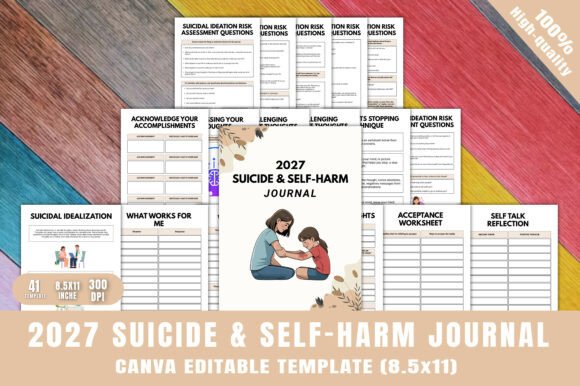
This journal stands out because it combines a full 2027 calendar and monthly planner with targeted worksheets for suicidal ideation, risk assessment, and cognitive restructuring. Unlike generic planners, it includes specialized pages such as the Suicidal Ideation Risk Assessment Steps and Suicidal Ideation Risk Assessment Questions, which guide users through a structured evaluation of their thoughts and feelings. These pages are not just checklists—they are designed to prompt thoughtful reflection and help identify patterns that may require professional attention.
The journal also features practical cognitive-behavioral tools like the Thought-Stopping Technique and Challenging Negative Thoughts worksheets. These exercises help users interrupt harmful thought cycles and replace them with more balanced perspectives. Additional pages for Expressing Your Thoughts, Acknowledge Your Accomplishments, and Self-Talk Reflection encourage a balanced focus on both struggles and strengths. The Acceptance Worksheet and Self-Critical Thoughts pages further support emotional regulation and self-compassion.
For weekly check-ins, the Weekly Debrief and What Works for Me pages allow users to track what strategies are effective and adjust their approach over time. The journal also includes practical elements like a To-Do List and Notes pages, making it functional for daily life while staying rooted in therapeutic goals. With 29 unique content pages and 41 professionally designed pages total, this journal covers a wide range of mental health needs in a single cohesive product.
Who Can Benefit from This Journal
This journal serves multiple audiences. For therapists and counselors, it provides ready-to-use worksheets that can be integrated into sessions or assigned as homework. The risk assessment pages are particularly valuable for clinicians who need a structured way to evaluate suicidal ideation over time. Life coaches and wellness practitioners can use the reflection and goal-setting pages to help clients build resilience and self-awareness without needing a clinical background.
Publishers and content creators who produce mental health journals will appreciate the fully editable Canva template. You can customize every aspect—colors, fonts, layout, and content—to align with your brand. This saves hours of design work while ensuring a professional, polished product. Individuals using the journal for personal growth can work through the exercises at their own pace, using the structured prompts to gain insight into their emotional patterns and develop healthier coping mechanisms.
The journal is also suitable for support groups and community programs focused on suicide prevention or self-harm recovery. Facilitaトrs can use the worksheets as discussion starters or handouts, and participants can use the journal to track their progress between meetings. The combination of monthly planning and targeted therapy tools makes it a comprehensive resource for ongoing support.
Practical Applications in Real-World Settings
Imagine a therapist preparing for a session with a client who has been struggling with recurring suicidal thoughts. Instead of creating worksheets from scratch, the therapist can pull the Suicidal Ideation Risk Assessment Questions page from the journal. These six pages of guided questions help the client articulate their feelings, identify triggers, and rate the intensity of their thoughts. The therapist can then use this information to tailor the session and track changes over subsequent appointments.
In a coaching context, a wellness coach might use the Thought-Stopping Technique worksheet with a client who experiences intrusive negative thoughts. The client practices identifying the thought, applying the stopping technique, and replacing it with a constructive alternative. Over time, the client builds a personalized toolkit that they can rely on outside of sessions. The What Works for Me page becomes a living document of effective strategies, reinforcing progress and self-efficacy.
For a publisher creating a line of mental health journals, the editable Canva template allows for quick customization. You can change the color scheme to match your brand, adjust the font for readability, and even modify the wording of certain prompts to better suit your target audience. The print-ready PDF ensures that the final product looks professional whether printed at home or through a commercial printer. The 300 DPI resolution and standard letter size (8.5 x 11 inches) guarantee crisp, clear printing every time.
Strengths and Considerations
One of the journal's greatest strengths is its comprehensive structure. It does not rely on a single approach but combines calendar planning, risk assessment, cognitive-behavioral exercises, and reflective writing. This variety keeps the user engaged and addresses different aspects of mental health—from immediate crisis management to long-term habit building. The 100% customizable source file and editable Canva template mean that you are not limited to the default design. You can add your own branding, remove pages that do not fit your needs, or create entirely new sections based on your expertise.
The inclusion of high-resolution JPG and PNG files makes it easy to use individual pages in digital formats—such as online courses, client portals, or social media posts. The print-ready PDF ensures consistency for physical copies, which is important for therapists who prefer tangible worksheets or publishers who sell printed journals.
However, there are considerations to keep in mind. The journal is designed as a supplemental tool, not a replacement for professional mental health care. Users with severe suicidal ideation or active self-harm should always work with a licensed therapist or crisis service. The risk assessment pages are valuable for tracking and discussion, but they do not substitute for clinical judgment. Additionally, the journal focuses on English-language content, so users or creators working in other languages may need to translate the prompts.
Another consideration is the specificity of the 2027 calendar. While the monthly planner is useful for that year, the exercises and worksheets are evergreen. Creators can update the calendar easily through the editable template, or they can use the journal as a standalone resource without the planner pages if they prefer a year-agnostic product.
How to Evaluate Suitability for Your Needs
Before committing to this journal, consider your primary use case. If you are a therapist, ask yourself: Do you need structured risk assessment tools that you can customize for each client? Do you value having reflection exercises that clients can complete between sessions? If yes, this journal aligns well with your practice.
If you are a publisher or creator, evaluate the level of customization you require. The Canva template offers significant flexibility, but you should be comfortable using Canva's editing tools. The file formats—PDF, JPG, PNG—cover most publishing needs, from print-on-demand to digital downloads. Consider whether you want to sell the journal as-is, or whether you plan to rebrand it entirely. The 100% customizable source file supports either approach.
For individual personal use, think about your goals. Are you looking for a daily planner that also helps you manage intrusive thoughts? Or do you want a workbook specifically for cognitive-behavioral exercises? The journal combines both, so it works well for people who want structure in both planning and emotional health. If you prefer a more guided or less clinical approach, you might find the risk assessment pages intense—but they can also be used sparingly based on your comfort level.
Getting the Most Out of the Journal
To maximize the journal's value, approach it as a living document. Use the Weekly Debrief to review what strategies helped and what challenges arose. Revisit the Acceptance Worksheet regularly as your understanding of acceptance evolves. The Self-Talk Reflection and Self-Critical Thoughts pages are particularly useful when done repeatedly—patterns become clearer over time.
If you are a professional, consider pairing the journal with your existing therapeutic framework. The worksheets align well with cognitive-behavioral therapy, dialectical behavior therapy, and acceptance and commitment therapy. You can assign specific pages based on the client's current focus—for example, using the Challenging Negative Thoughts worksheet when working on cognitive distortions, or the Expressing Your Thoughts page when encouraging emotional expression.
For creators, the Thank You Page included in the journal is a nice touch for building rapport with end users. You can personalize it with your brand message or leave it as a warm, appreciative note. The To-Do List and Notes pages add practicality, making the journal feel like a complete companion rather than just a collection of worksheets.
Final Thoughts
The 2027 Suicide Self-Harm Journal fills a specific and important niche in mental health resources. It offers structure without rigidity, depth without overwhelm, and flexibility without sacrificing professionalism. Whether you are using it to support your own well-being, to enhance your clinical practice, or to create a product that helps others, the journal's thoughtful design and customizable format make it a versatile asset. With 41 professionally designed pages, 29 unique content pages, and full editing capability, it provides a solid foundation that you can adapt to your unique context.
Mental health work requires tools that are both reliable and adaptable. This journal delivers on both fronts—and gives you the creative freedom to make it your own.