2026 Digital Kids Task Reward Charts Guide
Helping children develop responsibility and positive habits is one of the most rewarding challenges parents face. The 2026 Digital Kids Task Reward Charts Planner offers a practical, flexible system that makes this process easier and more engaging for both kids and adults. Instead of relying on vague reminders or inconsistent praise, this planner provides a clear, visual framework that children can understand and follow throughout the year.
At its heart, the 2026 Digital Kids Task Reward Charts system transforms everyday responsibilities into manageable, trackable activities. Whether your child needs help remembering to make their bed, complete homework, or limit screen time, this planner turns those goals into a game-like experience. The built-in reward structure motivates children to stick with their routines while giving parents a reliable way to acknowledge effort and progress.
What Makes This Planner Different
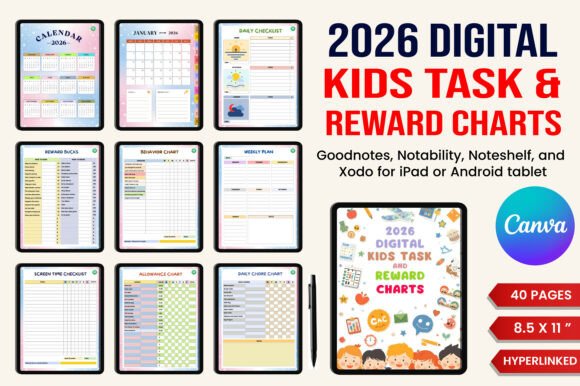
Unlike generic chore charts you might find online, this planner is designed specifically for the full 2026 calendar year. It includes over forty different templates that cover nearly every aspect of a child's daily life. From before-school checklists to screen time limits, allowance tracking to behavior charts, each template serves a specific purpose. This level of detail means you are not forcing a one-size-fits-all solution onto your family's unique routine.
The planner comes with both an editable Canva link and ready-to-upload PDF files. This dual format gives you flexibility. If you prefer to customize charts with your child's name, specific chores, or personalized rewards, the Canva templates let you make those changes quickly. If you want a print-and-go option, the high-quality PDF files are ready to use immediately. The standard 8.5 by 11 inch page size fits easily into binders or clipboards, making it practical for daily use.
Building Consistent Routines Without the Nagging
One of the biggest struggles parents face is repeating the same instructions day after day. The 2026 Digital Kids Task Reward Charts addresses this by putting the schedule front and center where children can see it. The daily checklist, daily routine tracker, and habit tracker work together to create a predictable structure. When children know what is expected of them and can see their own progress, they become more independent and need fewer reminders.
The before-school checklist is particularly helpful for busy mornings. Instead of rushing around reminding your child to brush teeth, pack their bag, and eat breakfast, they can follow the list on their own. The school day checklist extends this support into the afternoon and evening, covering homework, reading time, and preparing for the next day. Over time, these checklists become second nature, and the positive habits stick even without the chart.
How the Reward System Works
The reward component of this planner is what makes it genuinely engaging for children. The included reward bucks, reward chart, and allowance chart give kids something tangible to work toward. Rather than abstract praise, children earn points or bucks for completing tasks, which they can then exchange for privileges, small treats, or screen time. This teaches basic cause-and-effect thinking and introduces early concepts of earning and saving.
The behavior chart and consequence chart provide a balanced approach to discipline. Good behaviors are tracked and rewarded, while negative behaviors have clear, predictable consequences. This consistency helps children understand boundaries and make better choices. The weekly plan and responsibilities templates allow you to adjust expectations as your child grows, keeping the system relevant throughout the year.
Practical Use Cases for Families and Educators
Parents working from home will find the screen time checklist invaluable. It sets clear limits on device use while giving children autonomy to earn additional screen time through completed tasks. This removes the constant negotiation around tablets, phones, and video games. Instead, children understand exactly what they need to do to unlock their screen time allowance.
Homeschooling families can use the daily chore chart and responsibilities templates to divide household tasks among multiple children. The weekly plan helps coordinate everyone's schedule, making it easier to manage lessons, chores, and free time. The full 2026 calendar gives you a bird's-eye view of the entire year, so you can plan around holidays, school breaks, and special events.
Teachers and childcare providers can adapt these templates for classroom use. The habit tracker works well for tracking reading minutes, kindness acts, or homework completion. The reward bucks system can be customized for group settings, encouraging teamwork and individual accountability. The editable Canva link makes it easy to remove or add elements to fit a classroom environment.
For families with multiple children, the planner's variety of templates means each child can have their own customized set. Younger children might use the basic daily checklist with picture-based tasks, while older kids can manage the allowance chart and weekly responsibilities. This scalability makes the planner useful for ages roughly four through twelve, depending on the child's maturity and reading level.
Important Considerations Before Getting Started
While the 2026 Digital Kids Task Reward Charts Planner is comprehensive, it works best when introduced thoughtfully. Start with just a few templates rather than overwhelming your child with every chart at once. The daily checklist and one reward chart are usually enough for the first week. As your child becomes comfortable with the system, you can gradually add the behavior chart, consequence chart, and other templates.
Consistency matters more than perfection. If you miss a few days of tracking, simply pick up where you left off. Children respond well to routine, but they also understand that life happens. The planner is a tool to support your parenting, not another source of stress. Use the notes section to jot down what is working and what needs adjustment.
The editable Canva link requires a free or paid Canva account to customize. If you are new to Canva, the templates are designed to be user-friendly, with clear labels and easy-to-modify text fields. The PDF files are ready to print or upload to your preferred note-taking app. Some parents use the PDFs with tablet styluses for a paperless experience, while others prefer printed copies displayed on the refrigerator.
Think about the reward structure carefully. Reward bucks work best when tied to meaningful privileges rather than material items. Extra bedtime stories, choosing a family movie, picking a weekend activity, or earning fifteen minutes of special one-on-one time often motivate children more than toys or treats. The allowance chart can introduce money management skills for older children, but younger kids typically respond better to experience-based rewards.
Long-Term Value Beyond 2026
Although this planner is designed for the 2026 calendar year, the skills children develop using it last much longer. Learning to follow a checklist, manage responsibilities, delay gratification, and understand consequences are foundational life skills. Many parents find that after using the planner for several months, their children internalize the routines and require less external structure. The templates can then be adjusted or reduced as the child matures.
The forty different templates included in this planner give you room to experiment. What works for one season of the year may not work for another. Summer months might emphasize different chores than the school year. The reward chart can be refreshed with new goals and rewards to maintain interest. The notes pages provide space to track what is effective, so you can refine your approach as you go.
For families who have tried other chore systems and found them lacking, this planner's depth and flexibility often make the difference. The combination of daily checklists, behavioral tracking, financial literacy elements, and habit formation tools creates a holistic system rather than a simple chore list. It respects the complexity of raising responsible children while keeping the process straightforward and even fun.
The 2026 Digital Kids Task Reward Charts Planner is more than a organizational tool. It is a framework for teaching accountability, building confidence, and strengthening the parent-child relationship through clear expectations and consistent recognition. Whether you are a busy parent juggling work and family, a homeschool educator structuring your day, or a caregiver looking for reliable tools, this planner gives you everything you need to create a positive routine that your child can own and grow with.